Argo
Year
2023
TYPE
iPad
SCOPE
Product Design
CONTEXT
Maritime Operations
Concept
DURATION
3 weeks
OVERVIEW
Argo is a dual-interface iPad system for cruise ship operations, bridging two worlds that rarely share a screen: the complex logistics of running a vessel, and the premium hospitality experience guests expect onboard. One system, two audiences – operational crew managing the ship's moving parts, and guests navigating their stay – each with an interface tuned to what they actually need.
CHALLENGE
Cruise ship systems run at two very different speeds. Behind the scenes, crews depend on dense operational tools to track occupancy, logistics, weather, and passenger movement across multiple decks in real time. Out front, guests expect the opposite – interactions so smooth they never think about the machinery underneath. Argo had to serve both without letting either one compromise the other: an operational interface can't be dumbed down for elegance, and a guest interface can't leak the complexity crews live in.
And the complexity here wasn't only functional – it was structural. Eight decks, multiple room categories, real-time status updates, and live service coordination all needed a spatial and informational logic clear enough to navigate under pressure. The core challenge was organizing that density into interfaces that support fast operational decisions on the crew side while preserving the calm, effortless clarity a premium hospitality experience demands.
PROCESS
Structured the operational and guest experiences as distinct interfaces, organizing navigation in each around task urgency, frequency, and decision-making hierarchy, so the most critical actions surface first for each user.
Built a comprehensive style guide covering typography, iconography, and a color palette that reconciles brand tones with functional system and status colors – the latter essential in an operational context, where color has to communicate state, not just identity.
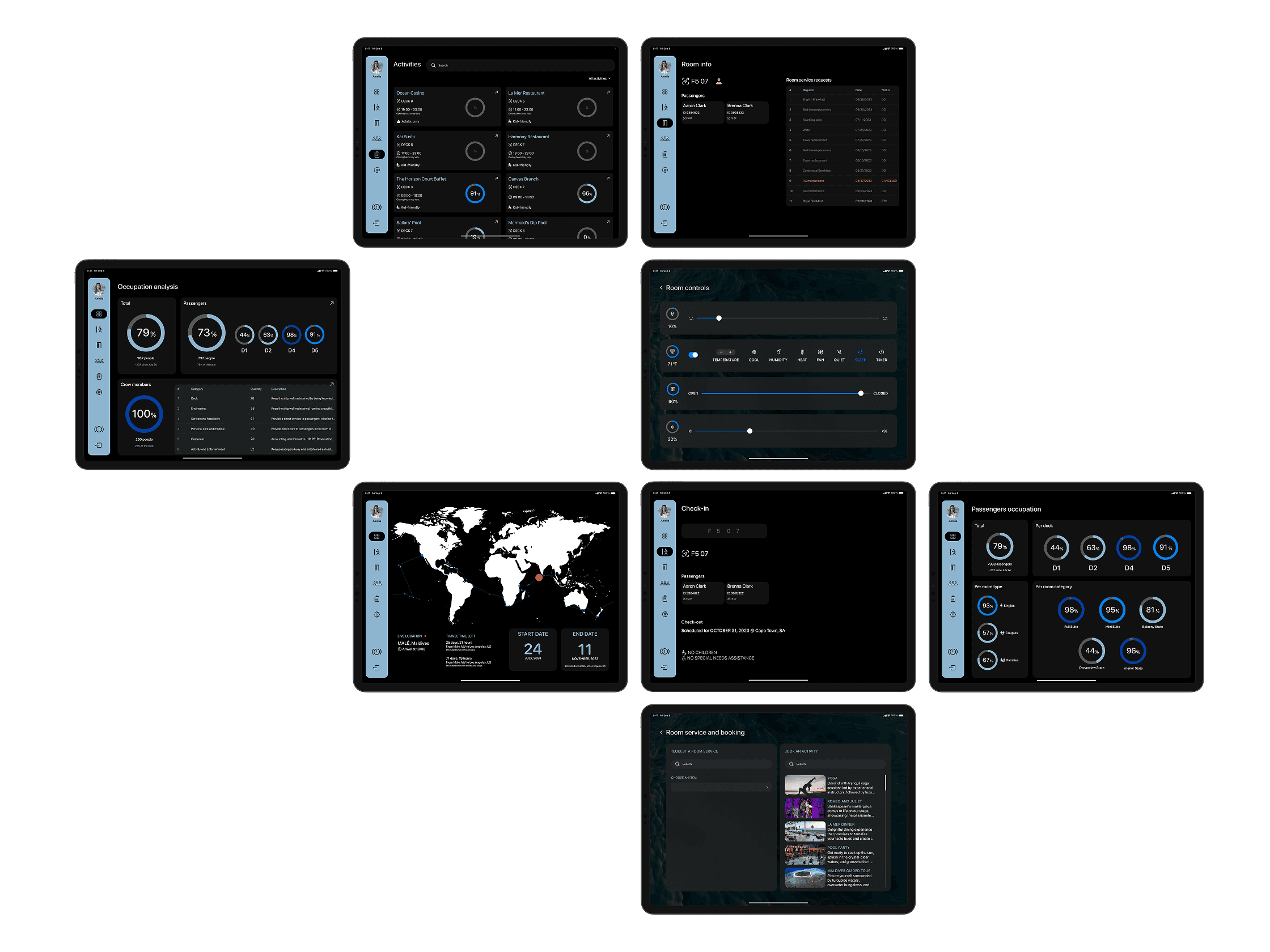
Translated dense operational requirements into structured dashboards, real-time status views, filtering systems, and cabin control screens, each optimized for fast, confident decisions under pressure.
Prototyped check-in, guest management, room-status filtering, live ship tracking, and cabin controls to show how the core functionality would actually behave in use, not just how it looks at rest.
SOLUTION
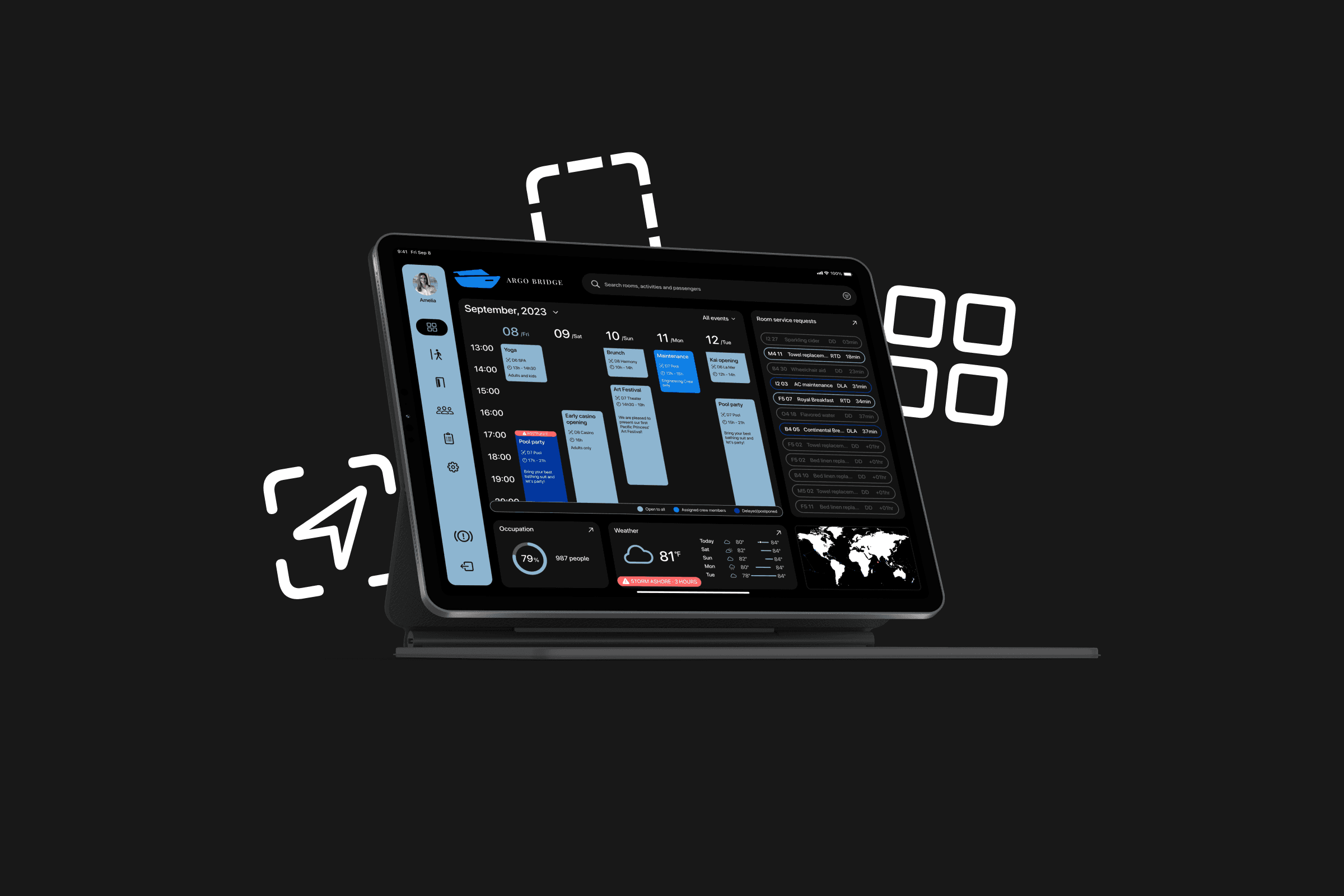
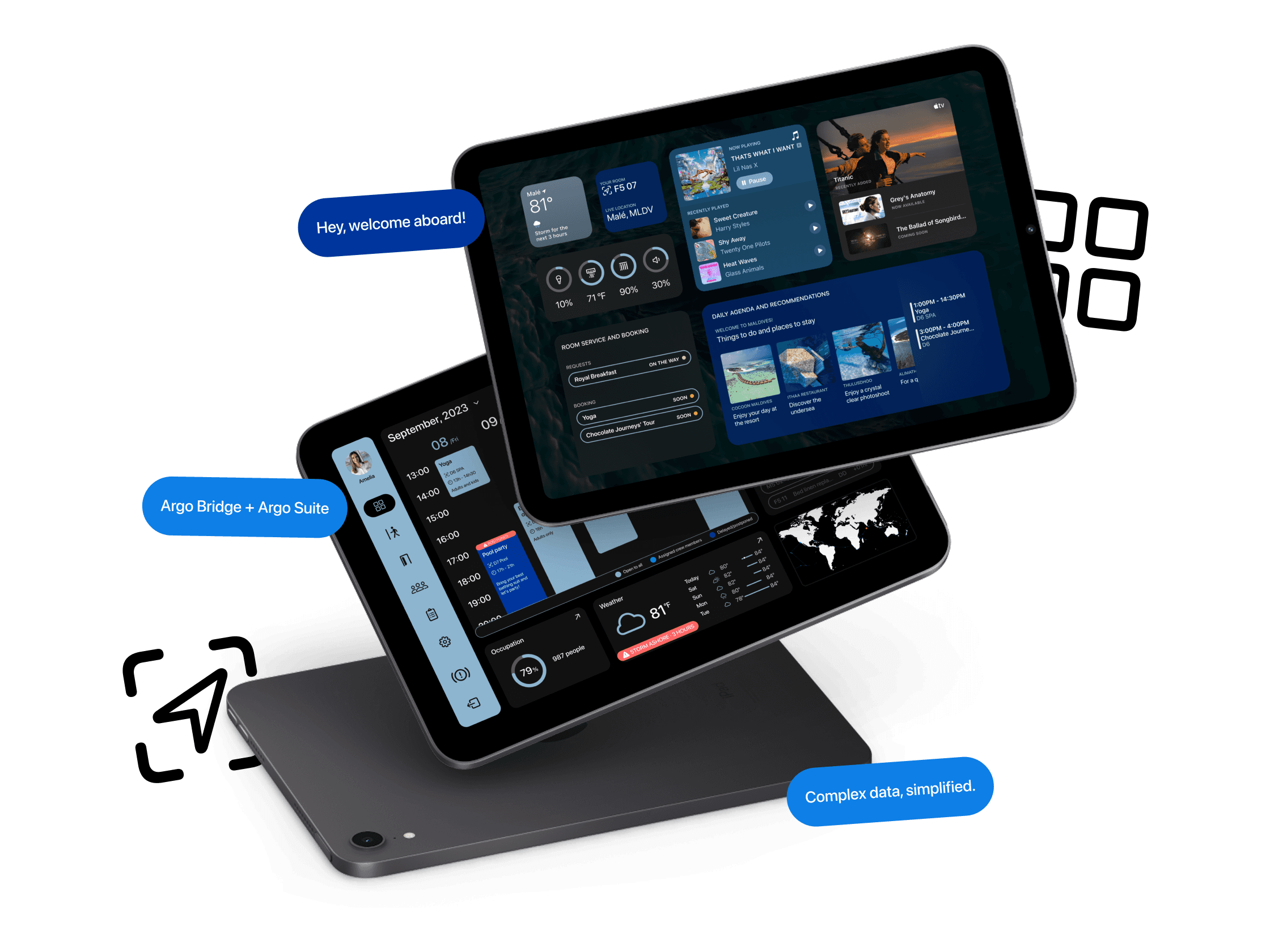
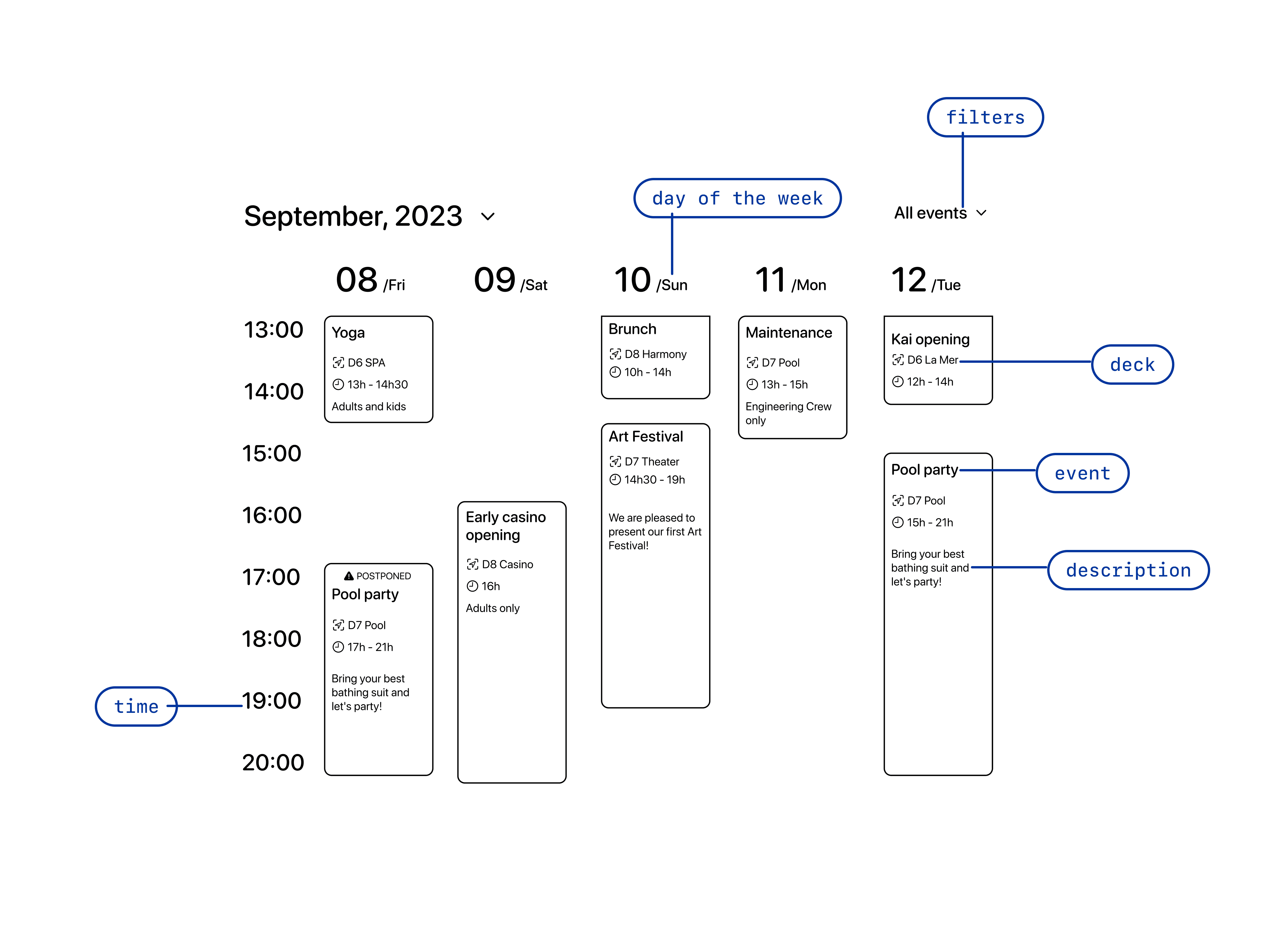
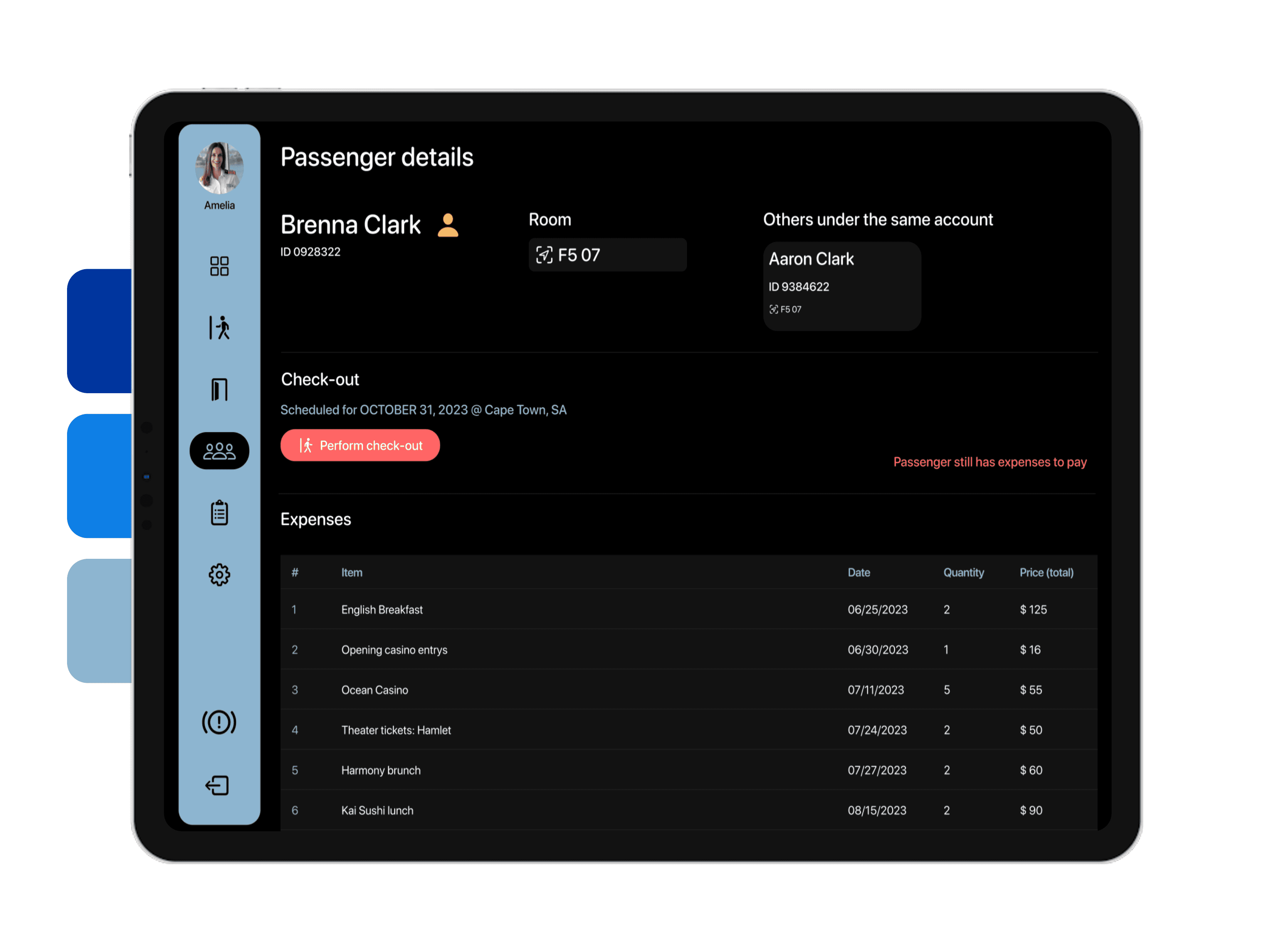
Argo Bridge – the operational side – consolidates cruise management into a single control interface. The dashboard surfaces a weekly agenda, live occupancy rates, weather alerts, and service-request monitoring at a glance, while dedicated flows for check-in, guest management, and room status let crew filter by deck, availability, and passenger data. The result is operational transparency across all eight decks from one screen.
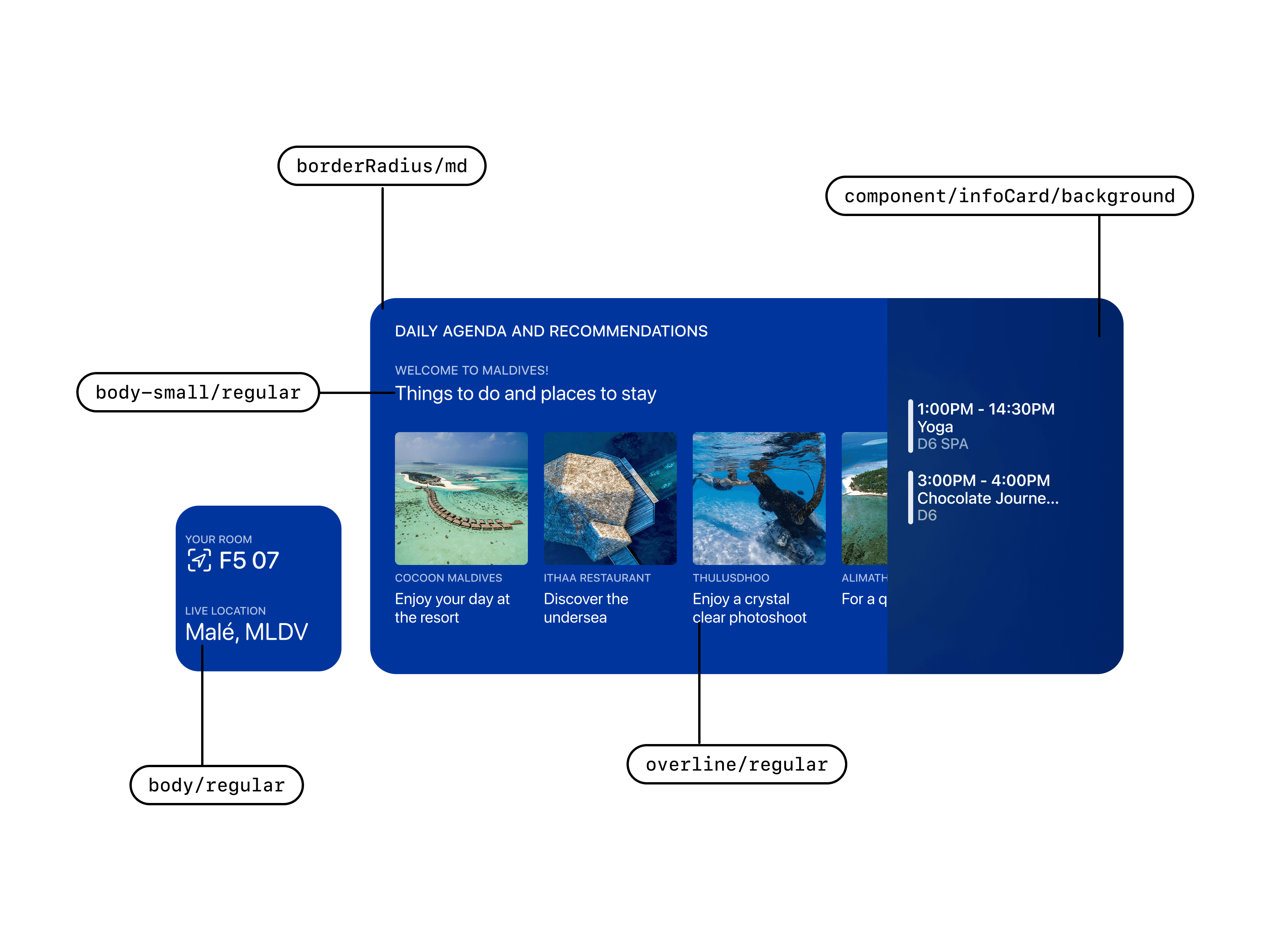
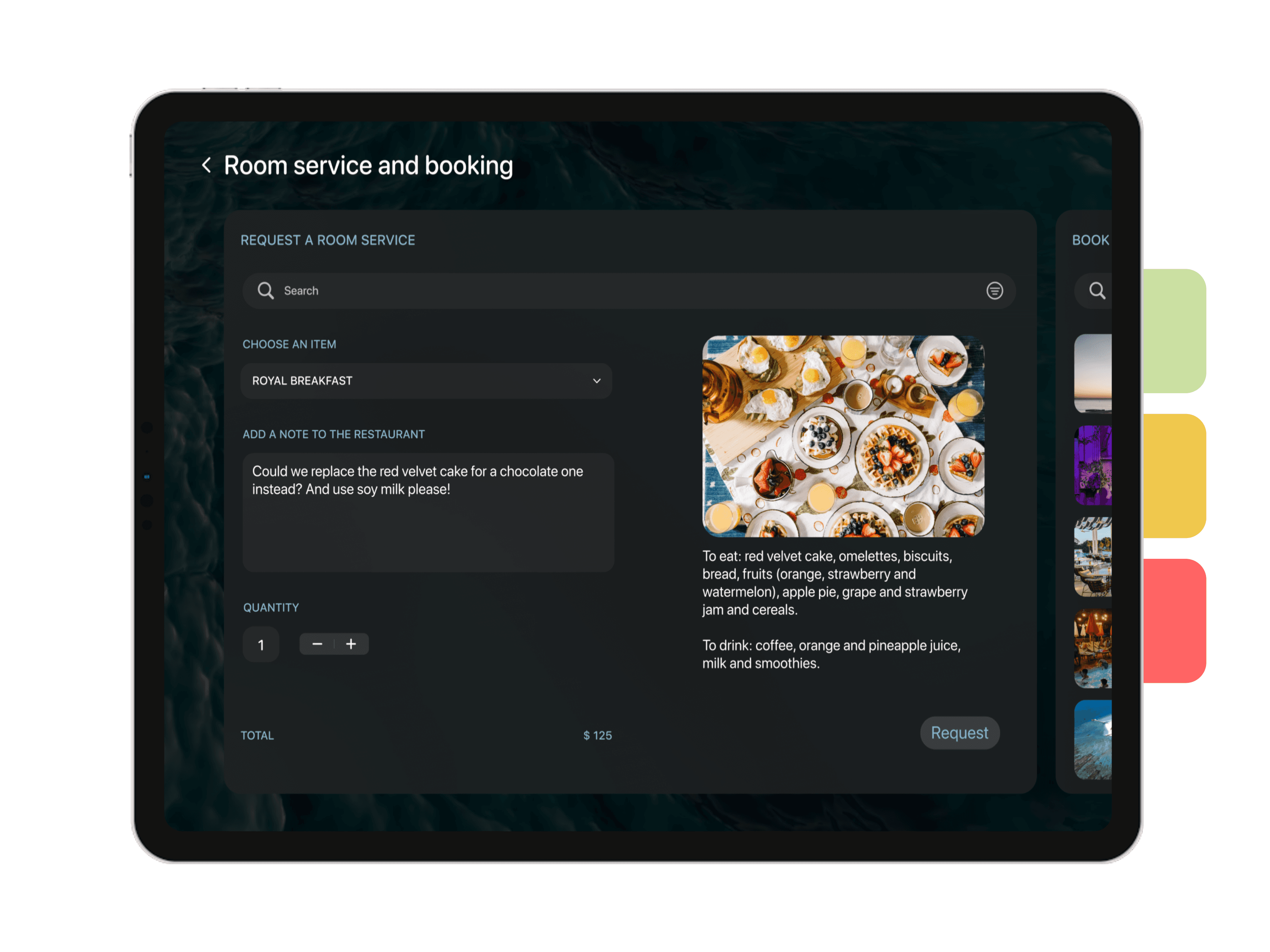
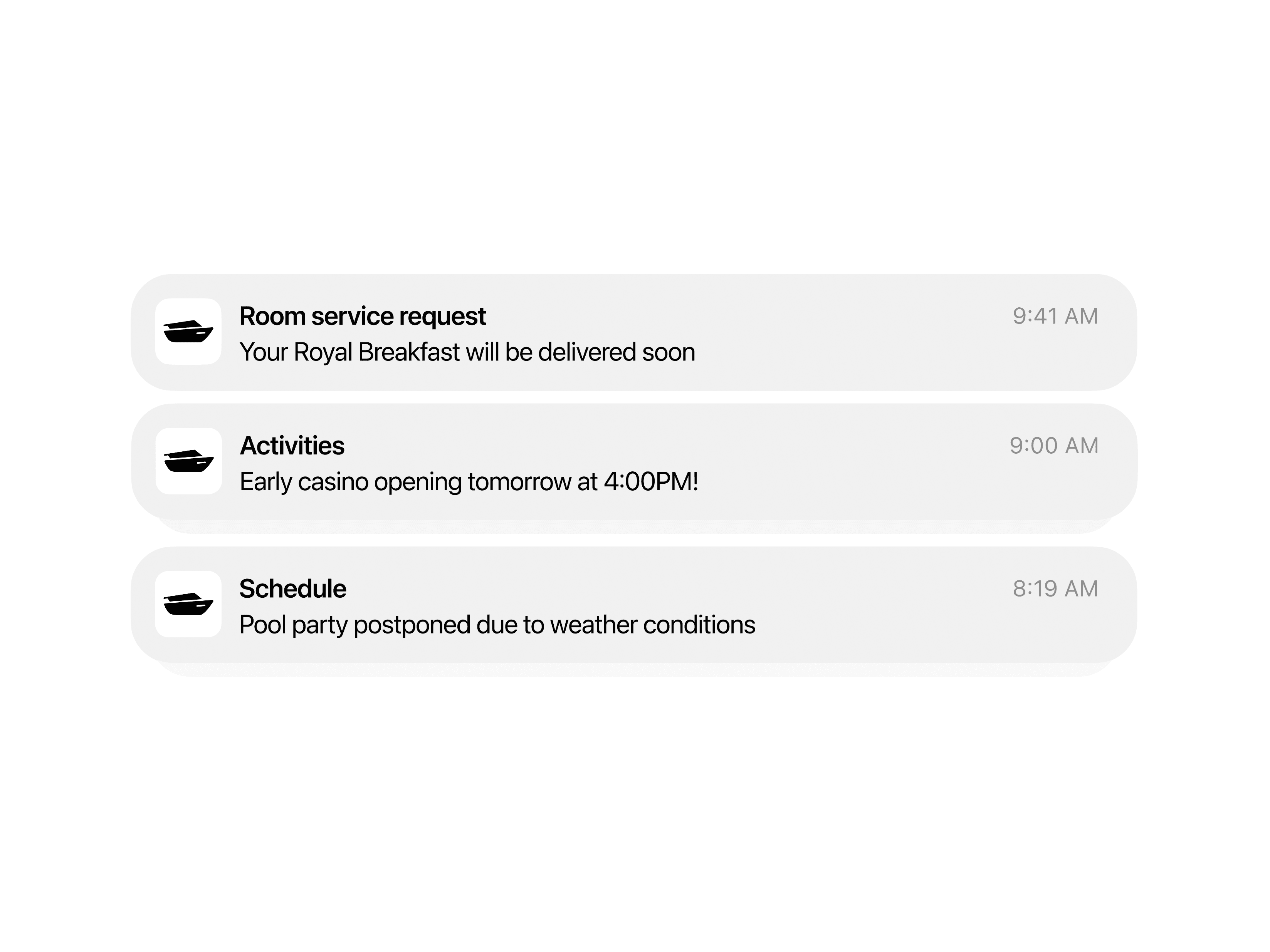
Argo Suite translates that same infrastructure into a refined in-cabin experience for guests – control over lighting, temperature, media, and room requests, alongside booking for restaurants, spas, and onboard activities. A live location screen mirrors the one crew use, creating a deliberate thread of continuity between the operational and guest systems: the same underlying data, expressed in two registers.
IMPACT
As a conceptual system, Argo explored how operational infrastructure and guest experience can be designed as interdependent layers rather than isolated products. By grounding both interfaces in a shared spatial logic and visual language, the project shows how clarity at the system level cascades into real outcomes: smoother coordination, faster operational decisions, and a higher perceived quality of the experience onboard.
It also stands as an argument for the role of product design in high-complexity environments – applying structured information architecture, real-time data visualization, and task-focused workflows to bring order and oversight to a genuinely dense operational problem.