Self
Year
2024
TYPE
Mobile
SCOPE
end-to-end
CONTEXT
Mental Health
DURATION
6 months
OVERVIEW
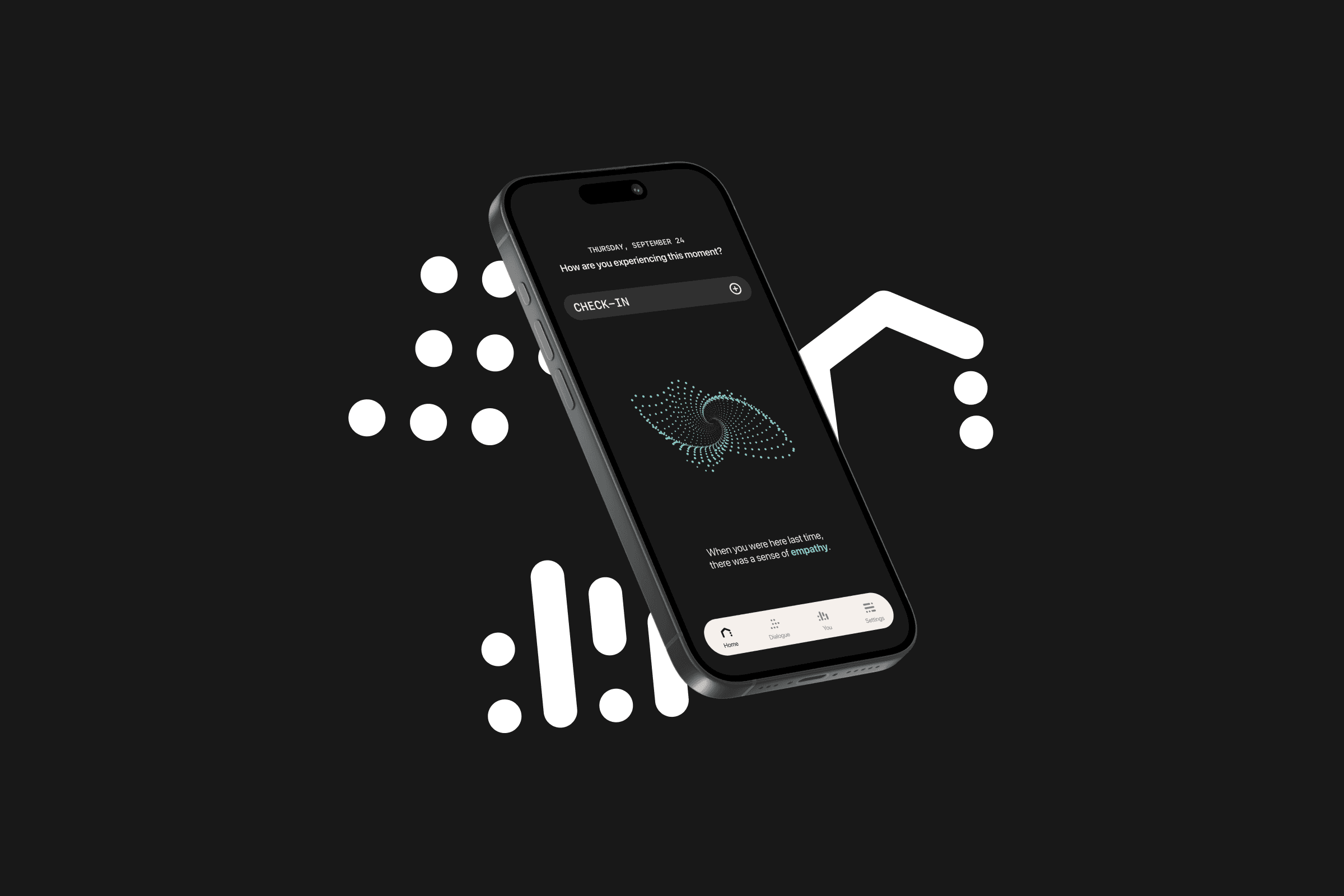
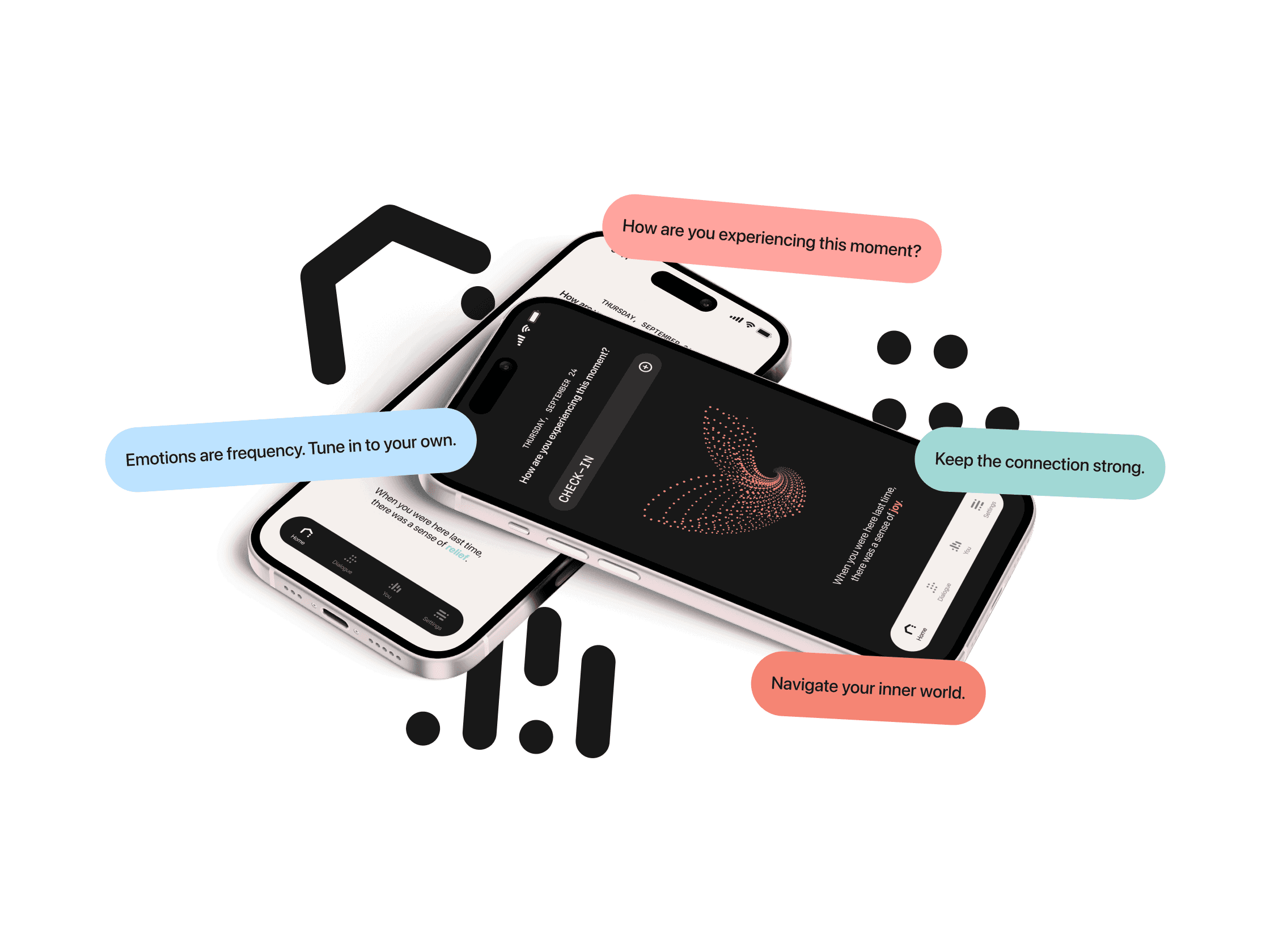
Self is a mental health app that helps young adults build emotional awareness through everyday, low-friction interactions. The project began with research into how this group actually takes care of their mental health, and the specific barriers they face in recognizing and understanding their own emotions. That research led to a central design bet: that combining behavioral psychology, physical cues, and personal context could help users move from a vague sense of "something's off" to a clearer understanding of what they're actually feeling. The result pairs a calm, intuitive interface with a full set of original illustrations – an experience that feels welcoming rather than clinical, and that supports small, sustained shifts in emotional self-awareness.
CHALLENGE
Most emotion-tracking tools reduce feelings to simplified daily check-ins, encouraging users to log “I felt good” or “I felt bad” without depth or context. The challenge was to design a system that allowed users to register emotions in a nuanced way – capturing intensity, energy levels, and related daily activities – rather than relying on shallow categorization.
At the same time, the project required responsibility and rigor. Because it addressed mental health, the solution had to be grounded in psychological research while integrating naturally into users’ routines, avoiding friction, overload, or a clinical tone that could discourage engagement.
PROCESS
Ran user interviews, reviewed literature, and consulted directly with psychologists to keep the concept clinically sound.
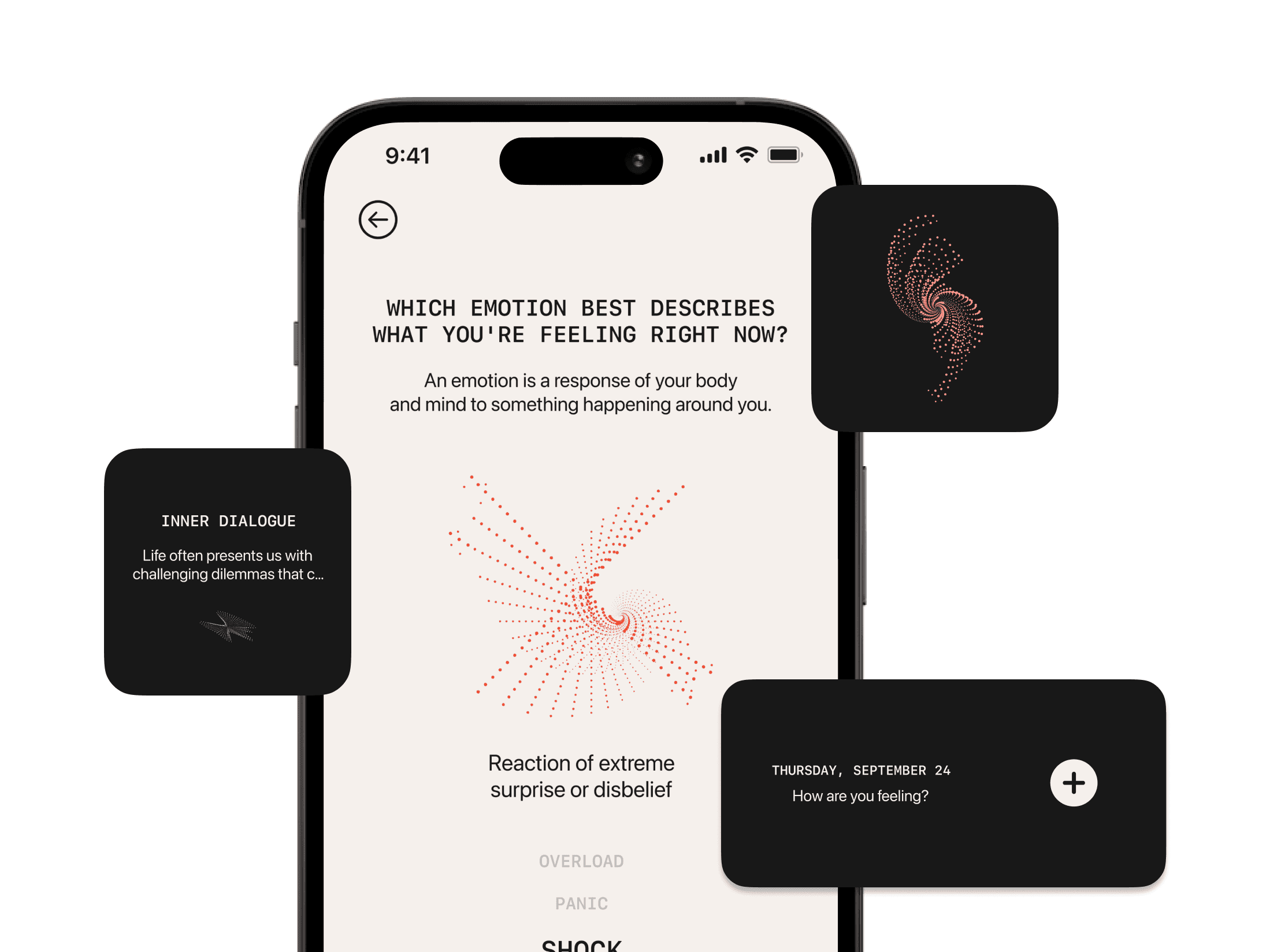
Studied emotion theory and translated it into a structured system of 48 emotions, organized across four energy–valence categories – the backbone of how users register what they feel.
Moved from low to high-fidelity across three major versions (v1–v3), with testing and refinement at each stage, through to developer handoff and App Store launch.
Built the full visual language: original pointillism-based illustrations, an accessible color palette, and defined text styles.
SOLUTION
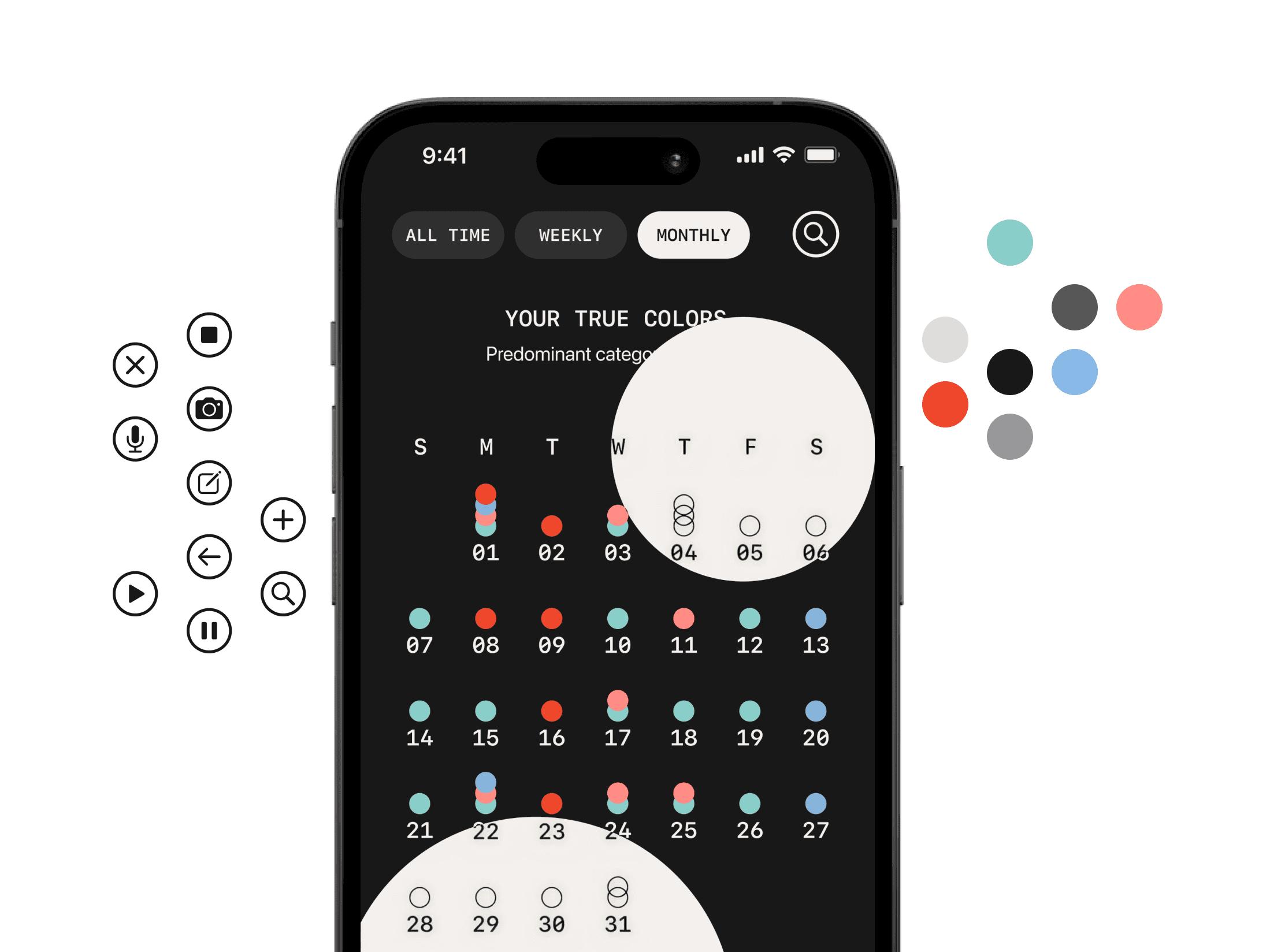
Self lets users log emotions with real depth, choosing from 48 research-based emotional states mapped across four energy–valence quadrants: high/low-mood and high/low energy. Each state carries its own custom illustration, which does more than decorate – it builds emotional literacy by giving users a visual vocabulary for feelings they might otherwise struggle to name.
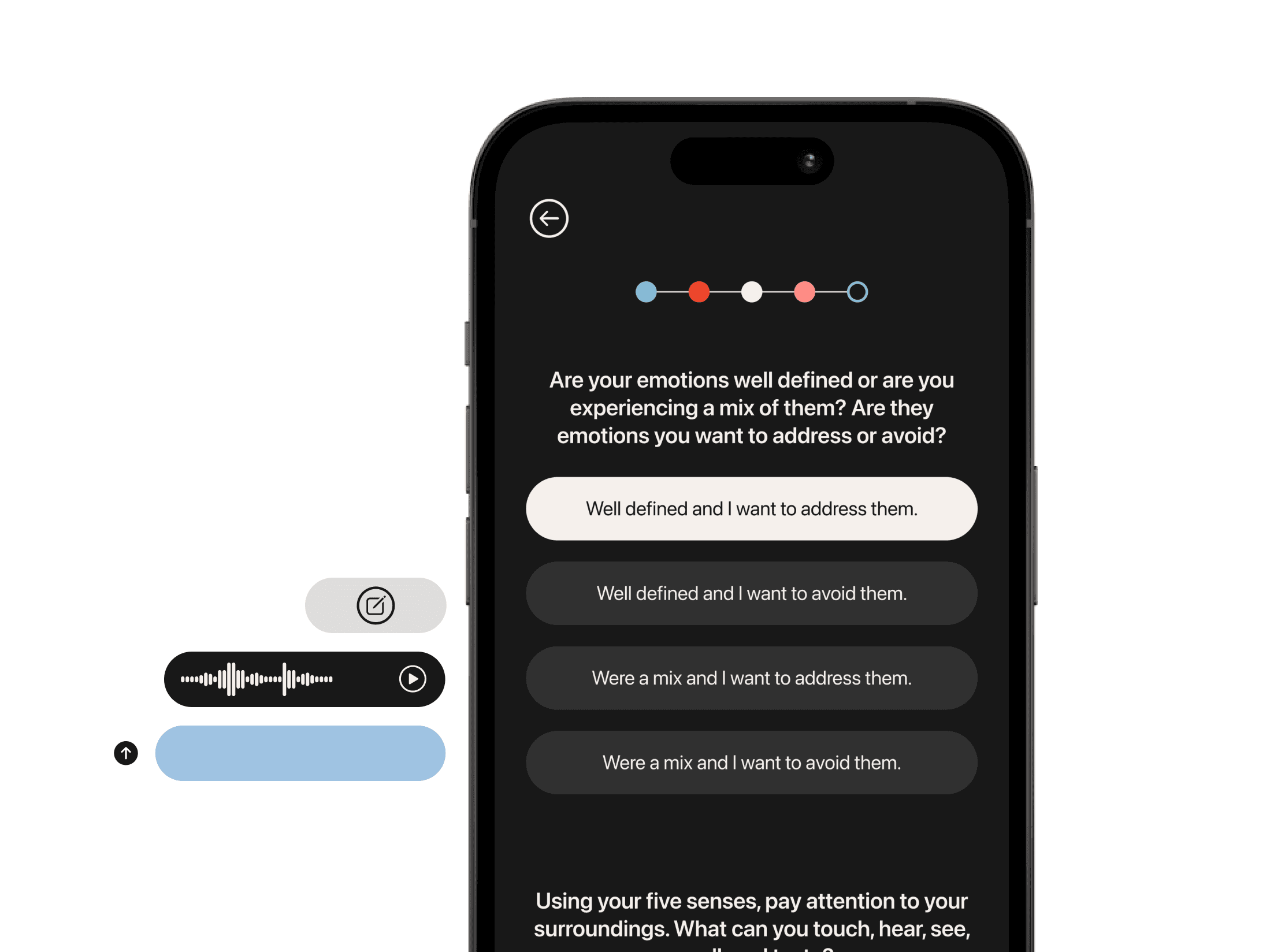
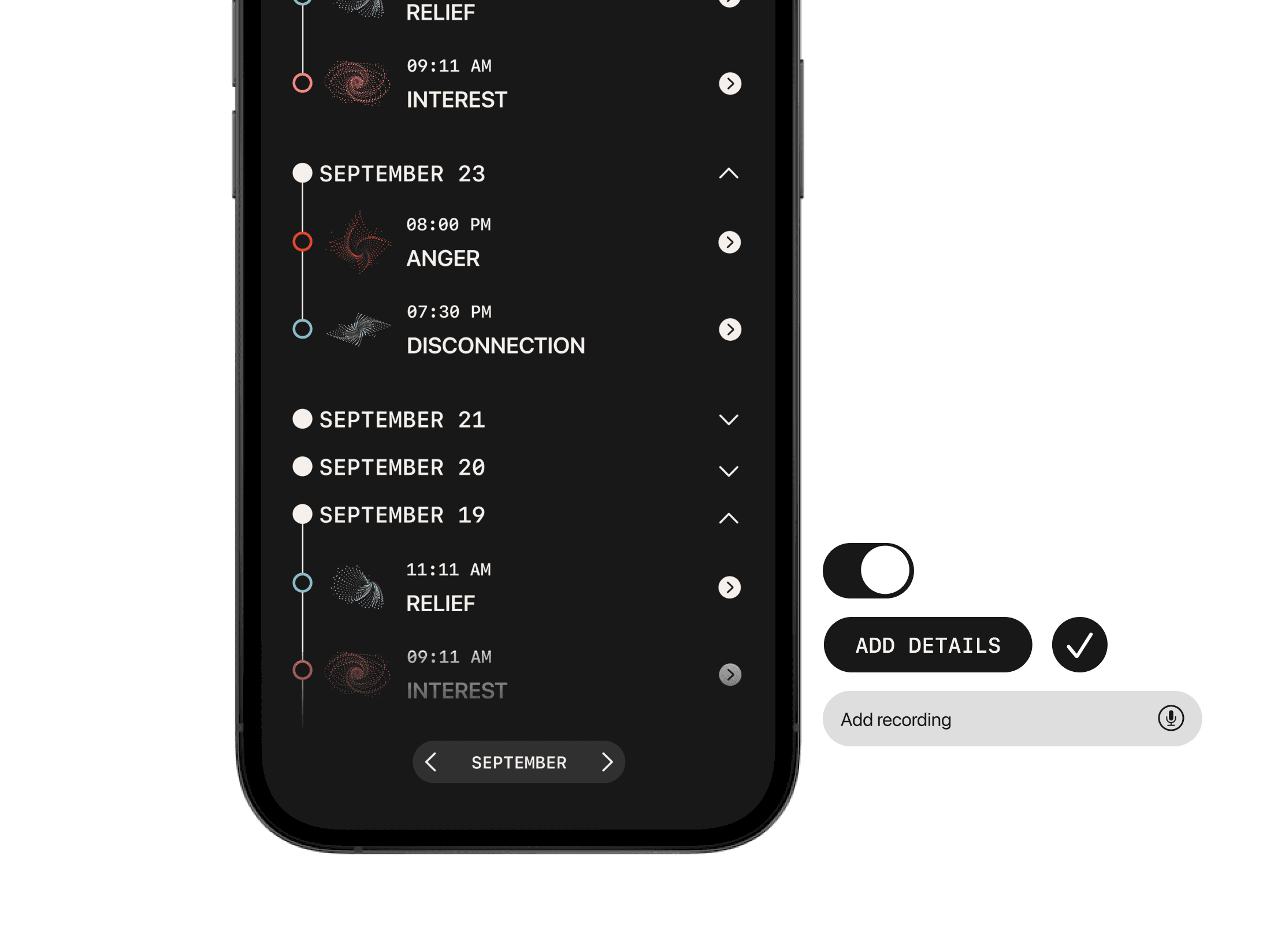
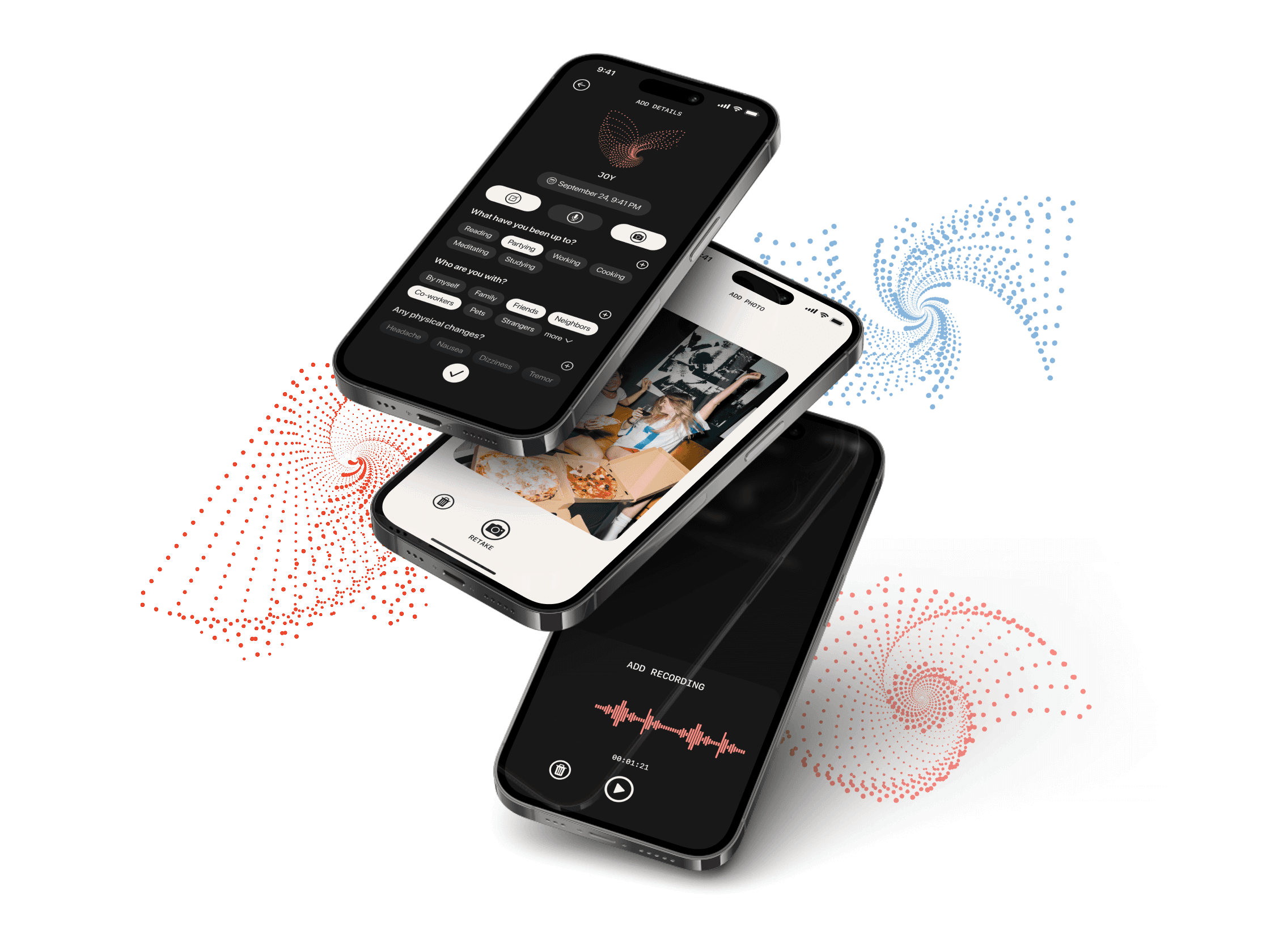
Logging goes beyond the moment itself: users can attach daily activities, written reflections, photos, and audio to any entry, turning a single data point into a contextualized record of what was actually happening around a feeling. That context is what makes patterns visible over time. The app also offers daily exercises drawn from cognitive behavioral therapy, completed in-app – shifting Self from a passive tracker into an active tool for building self-understanding. Accessibility is built in throughout: haptics, adaptive typography, contrast control, microinteractions, and considered motion keep the experience inclusive and responsive.
IMPACT
Self reframed emotional tracking from a simplified daily log into a structured, theory-based system – translating established psychological models into interactive, visual features that build emotional literacy and help users recognize their own patterns over time.
The outcome is a product that genuinely bridges research, design, development, and craft: it takes complex emotional concepts and makes them tangible and usable in everyday life. Built end-to-end, Self launched as a fully implemented product on the App Store and was recognized at the Apple Developer Academy's 2024 Graduation Day in Brazil – a validation of both its conceptual grounding and its execution as a real, shipped product.